Support ITT by donating used Apple computers. Please e-mail donatecomputers@inthesetimes.com!
PrintDiscuss
Features » December 1, 2009

INSIDE CUBA: Voices From the Island

Welcome to Cuba.

By Achy Obejas

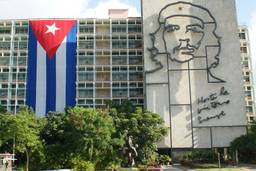
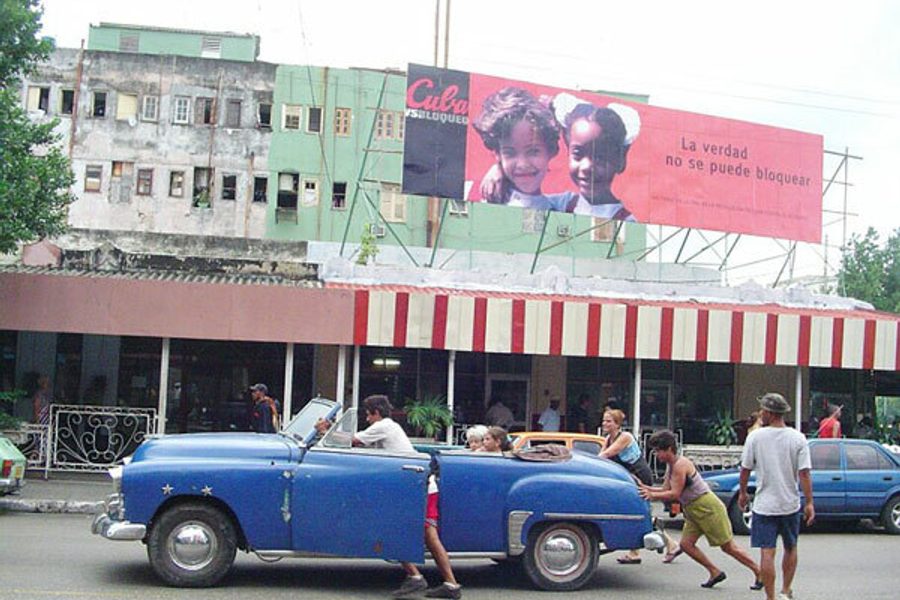
“The truth cannot be blockaded." (Photo by Yosvany Deya, HavanaTimes.org)

Americans—especially on the left—love to ask Cubans living abroad if we're for or against Cuba. I always say the same thing: It's complicated.
Share   Facebook Digg del.icio.us Newsvine   StumbleUpon Reddit Furl Propeller

When my family escaped from Cuba in 1963 – on a boat in the middle of the night – we thought the Cuban Revolution wouldn’t last. Soon, we believed, we’d be back home, in Cuba, brief sojourns in the U.S. having been practically a ritual for dissenting Cubans after any change in government.

Like so many others, my parents were counting on the revolutionary government to be like the dozen or so administrations since Cuba had freed itself from Spain at the end of the 19th century: with the exception of Gerardo Machado’s dictatorship, they were mostly ephemeral, propped up or dismissed at the whim of the United States. My family wasn’t rich – we owned nothing – but we wanted to go back to our country, to live in our homeland.

So many years later, the Cuban Revolution has proven itself remarkably durable. This year marks the 50th anniversary of the triumph of the Revolution.

As a child of exiles, I grew up with very particular mantras about Cuba and the Revolution. Because these came from my parents, I believed them whole-heartedly. I still remember going to Mexico as a 15 year-old exchange student and seeing someone wearing a Che Guevara t-shirt (it was not, in fact, the ubiquitous Korda image of today). I stood still, waiting for a reaction from the crowds … anything … because it seemed impossible that such a momentous thing could happen and that no one would scream or do something. Was it possible that the Cuban Revolution, the source of so much anguish for my family, could be such a banal thing to others that a Che T-shirt could pass by so inadvertently?

In college, I went to hear Irakere, the great Cuban jazz band, on their first U.S. tour with Stephen Stills. I wrote a gleeful review for my campus paper. What I didn’t write about was going backstage, marveling at the warmth and camaraderie we shared, at the sheer normalcy of it.

Later, in college, and especially as I met young Cubans who traveled to Cuba in defiance of familial objection and U.S. policy, I began to hear other stories about the island, and about the revolution. And I began to question many things. I met Cubans who lived in Cuba and were in the U.S. on scholar or artist visas.

I read my poetry in tandem with poet Eliseo Diego and argued about how gays were treated in Cuba with singer Sara Gonzales. There was much praising of the Revolution, or sober and measured commentary, so much in contrast to exile extreme. But sometimes, especially if there was too much drinking, there would be dark confessions, especially from closeted gays, about things that weren’t right.

I also briefly became friends with Reinaldo Arenas, an intense man with razor-sharp intellect whose contempt for the revolution was legendary (he left a note blaming his suicide on Fidel Castro!) but who also said upfront that he might never have become a writer without the revolution’s educational policy.

In 1995, I went to Cuba for the first time, attending a conference on national identity. It was a strange and enchanting trip, though the transcripts of the conference will reveal I said not one word. Instead, I watched, I listened. I did all the things returning Cubans do – I visited the tiny apartment in which I was conceived, I walked up the steps of the University of Havana, I strolled the Malec — n and cried a lot. I was much fawned over, the prodigal daughter returned – because in Cuba, I never left: my parents “took” me.

I also made lifelong friends on that visit, including Norberto Codina, the editor of La Gaceta de Cuba, and a contributor to this special issue. And when, two years later, I fell in love with a Cuban artist who would go on to do some of the most challenging work seen on the island since the revolution, I began a seven year process of going back, often for months at a time – of, in fact, living in Cuba, having a home and neighbors and daily rituals, of having my ideas challenged and sharpened, of constantly discovering new and unexpected aspects of Cuba and its revolution.

I never believed my experience in Cuba was like those who had never left: Though no one could tell the difference when I was out and about – I don’t look any different, I don’t dress any different, and I speak Spanish fluently, with the usual feverish Cuban tempo, and chock full of Havana argot – I knew I could leave, I had access others didn’t (in a typical twist, it was me – the writer living abroad — who introduced my artist girlfriend to Abel Prieto, who would later become the Minister of Culture), I had dollars, I could go into the tourist store my family couldn’t enter and resolve all sorts of things. I could say and do things for which there would be little patience if I were actually living there, never left.

Americans – especially on the left – love to ask Cubans living abroad, especially Cuban-Americans, if we’re for or against Cuba, if we’re pro or anti-Fidel, if we’re revolutionary or anti-revolutionary. It’s a hateful and ignorant question because it assumes our situation is black and white, binary, oppositional. I always say the same thing when I’m asked: It’s complicated.

Part of the problem is that, well, it’s our problem – that is, it’s a Cuban problem. I know few Cubans, and not just in Miami but in Havana too, who want intervention. The vast majority of us – here and there and everywhere – want reconciliation, an end to estrangement, greater civil liberties on the island, a more efficient and open economy, peace and friendship with the U.S. But we want to figure this out amongst ourselves, among Cubans.

I know this is hard sometimes for my non-Cuban friends on the left, who are so invested in Cuba they feel it’s practically theirs (and so invested sometimes, that they’re loath to see the evidence with their own eyes of anything that might contradict their ideas). But it’s not. Cuba’s ours. I know it’s hard to imagine that the crazies in Miami should actually have a say in Cuba’s future. But they should, yes. When I’m in Cuba, I tell them that. And in Miami, I don’t shy away from saying that those who stayed in Cuba are the ones who need to make the decisions, the ones who need to figure out what’s best, and that those of us who have chosen to live abroad – for whatever reason – can only have an auxiliary role. Cuba is for Cubans.

The most crucial lesson I’ve learned going back and forth – I still do it, at least once or twice a year – is that we have to listen to each other, really listen. For me that has meant acknowledging that my parents were, in fact, right about many things. It has also meant an understanding that what Cubans in Cuba think is paramount. So when In These Times approached me to put together a special issue marking the revolution’s 50th anniversary, the very first thing I asked was that it be an issue by Cubans on the island.

I wanted this to be different than the usual packaging, full of economic or historical treatises. Because I’m a writer engaged with culture, and particularly with Cuban culture – this will be the tenth year I single-handedly support La Gaceta’s annual short story contest, for example – I have a disposition for seeing things through a cultural prism. But I also think culture, frankly, is a better indicator of the future than almost anything else. Anyone familiar with the Cuban culture of sacrifice and inventiveness would have known that, the rational logic of economics aside, the collapse of the Soviet Union in 1989 would bring deep changes but that Cuba, and its revolution, would survive.

So in this special In These Times edition, “Inside Cuba: Voices from the Island,” you’ll find literary writers, rather than academic experts. No one is a dissident, though they are all critical in some way.

Kaloian is an official photographer for Juventud Rebelde, the newspaper of the Union of Communist Youth. Leonardo Padura is Cuba’s best known, and probably most lauded, contemporary writer. Yohamna Depestre should be too. After years of working in the system, Orlando Luis Pardo Lazo has begun to work outside it: he now blogs and self-publishes, both activities technically not legal in Cuba. Yoss is, well, many things, among them a great lover of rock – Cuban rock. You didn’t know there was Cuban rock? Now you do.

There are two articles that were not exactly submitted for the section. One is a compilation of entry selections from a blog that details gay life in Cuba. Technically the blog is unsigned, though it is an official forum of the Reinaldo Arenas LGBT Memorial Foundation, a queer grassroots group in Cuba not recognized by the government. When I met the president of the group, Aliomar Janjaque, and the vice president, Mario José Delgado Gonzáles, last summer, they made a point of underscoring that they’re not dissidents.

“I don’t give a damn what kind of government we have,” said Janjaque, exasperated. “What I care about is human rights, what I care about is how gay people are treated.”

Delgado was going to write something for us, but he was arrested, then released and kicked out of school, for engaging in activities that, at least from here, might seem rather surreal. Some of you may be surprised by the constant use of the word “homosexual” in the blog entries, so uncomfortably clinical for us in the United States. But I kept it because that’s how it appears in the original Spanish, just as “gay,” in English, also appears.

The other article is a column that appeared for only a few hours on the Juventud Rebelde website. It’s poignant and heartbreaking but, perhaps more importantly, it’s very telling.

There are many other things, of course, that we wish we could have included. Things that should be here, things that will, hopefully, be here in future issues of In These Times. This isn’t definitive. It’s just a glance. A peek inside.

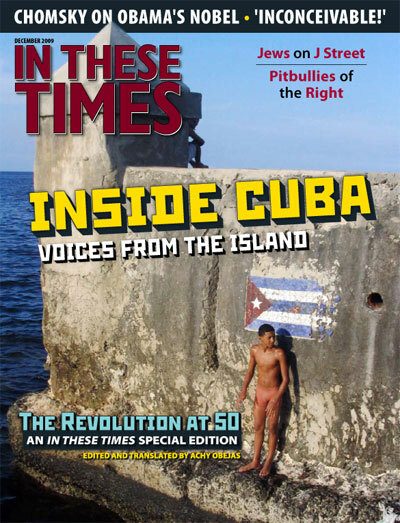
Editor’s note: This article appeared, in much shorter form, as the introduction to the special “Inside Cuba” section of In These Times’ December 2009 issue.
  • Help In These Times publish more articles like this. Donate today!
  • Subscribe today and save 46% off the newsstand price!
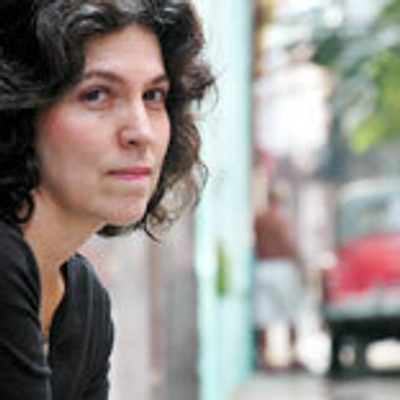
Achy Obejas, a Havana-born member of the In These Times Board of Editors, is the author of Ruins (Akashic 2009, akashicbooks.com) and Aguas & Otros Cuentos (Editorial Letras Cubanas, 2009). A former staff writer for the Chicago Tribune, she translated Junot Diaz's Pulitzer Prize-winning The Brief Wondrous Life of Oscar Wao (Riverhead 2008) into Spanish. She is the Sor Juana Visiting Writer at DePaul University in Chicago.

More information about Achy Obejas
Share   StumbleUpon Facebook Digg del.icio.us Reddit Newsvine Propeller Furl
  • subscribe to print magazine

  • Reader Comments

    Thanks for posting this article. It’s thoughtful and nuanced. Particularly I appreciate your recognition that the fundamental decisions about Cuba and its future has to be made in Cuba by the people who live there. Others who reside elsewhere can have opinions, but it’s the Cubans on the island who have to make the final decisions.

    The tendency and the temptation to see things as one wants or wishes them to be is a deeply held human characteristic.

    Some on the political left wish away the numerous problems which obviously exist in Cuba, not all of which are attributable to the blockade maintained by the United States.

    But Washington policy makers as well as Miami Militants (not an athletic team), have long felt if they could just hang on to their efforts to strangle the island another day or month or year longer, the pesky revolutionary government will finally collapse. Then some of the Miami exiles hope to go back and take back what they lost in the aftermath of the Cuban revolution.

    As an American-Cuban (not a Cuban-American), I’ve tried to follow developments in Cuba for many years. Editing CubaNews, a free Yahoo news group, I’ve collected a wide range of news, information and analysis from, about and related to Cuba, now in its tenth year of service. While I’m very supportive of Cuba, I’m very mindful that it’s a far from perfect place, and so the CubaNews list also shares a sampling of critical and even very hostile sources.

    Numerous commentaries, original translations from Cuban sources are part of the work I’ve been doing since my first adult trip to Cuba, in 1999. (My father, who’d lived in Cuba with his parents during World War II, took me to see the island in 1956 when I was just 12 years old.)

    Details about the CubaNews list can be found here:
    http://groups.yahoo.com/group/CubaNews/

    One area of particularly interest has been the evolution of LGBT life on the island, and I’ve created a special page to track news, views and information on this significant topic here:
    http://www.walterlippmann.com/lgbt-cuba.html

    Thanks for this commentary. I look forward to seeing the entire issue of the magazine.


    Walter Lippmann
    Los Angeles, California

    Posted by walterlx on Dec 1, 2009 at 5:29 PM

    Dear Achy,

    Thank you for your insightful article which I hope will be read by many people and considered carefully.  You speak to the real context within which the Cuba issues can be successfully resolved.  to help publicize your article, it is discussed and referred to in another article on the blogosphere,  “Neo Conservative Nonsense, Wise Words from Achy, and What Will Happen to the Cuban Adjustment Act” at www.uscuba.blogspot.com

    We look forward to reading all of your articles and this important series.

    Posted by Tony Martinez on Dec 2, 2009 at 2:29 PM

    Achy,

    I dont know where to even begin.

    This introduction is replete with moral ambiguity and myopic in nature, whether, best case scenario, unintended or, worst case scenario, agenda driven.

    You use the incredibly stale “we want reconciliation and the end of estrangement” as if we still lived in the sixties, where there were no bridges between Cubans that were forced to exile and those who remained in Cuba with fervent zeal towards the Revolution. Fact of the matter is that today, this “separation” is a fallacy, and in this Militant Miami ( as Mr. Lippman puts it) you’ll find a diverse spectrum of Cubans from all walks of life and differing social, cultural and political ideologies. Moreover, in this same “extreme exile” community you will find generations of Cubans who live, love and work together who have arrived here in the states during completely different eras.

    These Miami Militants, or gusanos, or mafiosi as we are referred to by the myopic are the very same ones who support their families in Cuba to the tune of almost a billion dollars a year. The Cuban exile is Cuba’s greatest export, guaranteeing untold millions in profit each and every year. heck, you cant spit in Miami without hitting an “Envios a Cuba” store and you can purchase a calling card to Cuba at every corner gas station.

    Ill argue that not only are the exile community and cubans in Cuban reconciled, but united as one. These “crazies” in Miami - as you put it in your own words - are the ones that take in their family members and friends when they arrive. They clothe them, feed them, show them the lay of the land, get them jobs, and generally support them in every way they can. Yet you, and your two commentors here, denigrate same with impunity.

    Moreover, you speak of wanting a return of civil liberties and human rights in Cuba, yet you have chosen to visit and live under the auspices of very same government that usurped same. Yet, you fail to mention that government’s “extremism” and you fail to regale them with appellations such as “crazies”.

    All of your arguments here are as tired, old, coherent and decrepit as the old man in Cuba with a colostomy bag that no one sees and whose health no one is allowed to remark on.

    The problem with Cuba - whether you chose to face this reality or not - is not a cultural one. It is, by all means, a political and ideological one.

    You quote Janjaque as stating:

    I don’t give a damn what kind of government we have. What I care about is human rights, what I care about is how gay people are treated.”

    As if it made complete sense when, in reality, his statement is absolutely senseless.

    if Janjaque cares about human rights and about how gay people are treated, then his focus should be on who denies him his rights and treats him like chattel.

    it certainly isnt the Crazy, Extremist Miami Mafiaesque Militant Gusaneria, and it certainly isnt his fellow average Cubans in Cuba. Anyone with a modicum of integrity knows exactly who the culprit is here and every Cuban of integrity, within Cuba or abroad, has a duty to expose same for all the world to witness.

    Posted by Valentin Prieto on Dec 2, 2009 at 3:52 PM

    Achy,

    Thank you for sharing your thoughts and experiences with us. Reading your piece I couldn’t help but focus on the word “complicated.” Building a new society is just that; there are no ready answers to the concrete problems that arise, the dogmatic assertions on both sides of the political spectrum notwithstanding. I see the same dynamic playing itself out in Venezuela. Raul Castro was right when he said that all of Cuba’s ills can not be attributed to the embargo. Those on the left who believe the contrary have an easy excuse not to go beyond the paradigms in order to analyze real problems.

    Steve Ellner

    Posted by Steve Ellner on Dec 3, 2009 at 3:47 PM

    I have just now been able to access this issue and find it disappointing, not so much for what it contains (although certain sections leave a very specific distorted perspective), but for what it ignores. It is not simply a matter of things “we wish we could have included”.  The perspective is flat because it is decidedly one-dimensional.

    I have travelled to Cuba since 1982, and for the past 16 years have spent substantial amounts of time on the island as of counsel to the US law firm that represents the Cuban government and Cuban enterprises in the United States.  Although my professional work makes me a legal advocate for Cuban interests, it is not from this perspective that I write, but rather from my personal experience with the complexity and diversity of Cuban society.  Because of length limitations on postings, I have pared down this comment and will place additional posts with specific articles. 

    The issue’s myopia on the question of diversity and sexual orientation in Cuba today is surprising to say the least.  Presented with such a limited, distorted view, the uninformed reader remains uninformed.  The incidents of oppression alleged in the excerpted blog published in ITT, are not official policy. The last decade has seen a sea change in not only official policy, shedding discriminatory practices, but there ar efforts in the print, electronic and broadcast media as well as through educational and cultural programs to eliminate homophobia in Cuban society. 

    At the same time, no one can deny the general flatness that has characterized the Cuban government media for decades. But here too there are signs of change, even in Granma, the newspaper of the Communist Party (see the Friday section of letters from readers).

    Without doubt there is a segment of the population that is disaffected and alienated from the Cuban revolution and for whom the so-called “guerilla” blogs offer an outlet for expressing their frustrations and disenchantment.  Although the growth of such blogs is a phenomenon that cannot be ignored, they are not the only space for expression nor do they represent the range of discussion and debate in Cuba today.  There are interesting debates and exchanges and ones that have potential to influence change taking place among Cubans who are both critical and also invested enough in their future to be constructive.  For example, Yohandry’s blog, the journal Temas and the monthly public debates it sponsors, the very recent UNEAC response to censorship of a video clip that has sparked a heated discussion on the definition of pornography, to name only a few. 

    Finally, the point raised by Achy about who has a right to have a say about Cuba is unclear. It is indisputable that it is the Cubans on the island who are the only ones to determine their future. If the point is that only Cubans on the island can speak about and assess their experience. Fair enough. Or is the point that only Cubans, wherever they may be, have anything legitimate to say on issues related to Cuba? Certainly, the perspective of Cubans on the island is all but absent in the US press of all stripes. The ITT issue provides a selected range, but a broader range of voices should be heard, including those who are in official positions and those who are critically engaged in the process of finding solutions to deficient and failed policies,

    Beyond the Cuban American community, the left in the United States also has an interest and stake in future developments in Cuba. There are many people engaged in long term cooperative efforts in a wide range of fields from environmental issues, agricultural policy, community health, scientific and academic research, culture, organizational development, and more.  The contributions go in both directions; the experiences, lessons learned, and the richness of the exchanges have relevance to people in both countries.  The relationship across the Florida straits is not confined to Cuban Americans.

    Posted by debrae on Jan 5, 2010 at 1:43 AM
  • register a new account »Posting Security

    To participate in our forums, please register for a free account.
Appeared in the December 2009 Issue
Also by Achy Obejas
  • The Big Other
    A giant stalks the literary landscape.Posted on March 10, 2009
  • Portrait of the Awkward Artist
    If Pablo Helguera's The Boy Inside the Letter (Jorge Pinto Books, 2007) had… morePosted on January 22, 2008
  • Prairie Style Romance
    Though Nancy Horan takes great liberty in imagining intimate scenes between Frank Lloyd Wright and Mamah Borthwick Cheney--of which there is no evidence--Loving Frank ultimately rests on historical recordPosted on November 13, 2007
  • Survival of the Adapted
    The History of My Shoes and the Evolution of Darwin's Theory takes the theory of evolution--"survival of the fittest," a phrase that appeared only in a later printing of Charles Darwin's classic text--and, in alternating chapters, juxtaposes the relationship between Darwin and fellow biologist Alfred Russel Wallace with Fries' curiosity about his own adaptations to a world unprepared for his body and his means of motionPosted on October 16, 2007
  • No Happy Endings
    Escape from North Korea, the world's most repressive regimePosted on September 11, 2007
If you like what you're reading, why not help pay for it?
IN THESE TIMES COMMUNITY MEMBERS