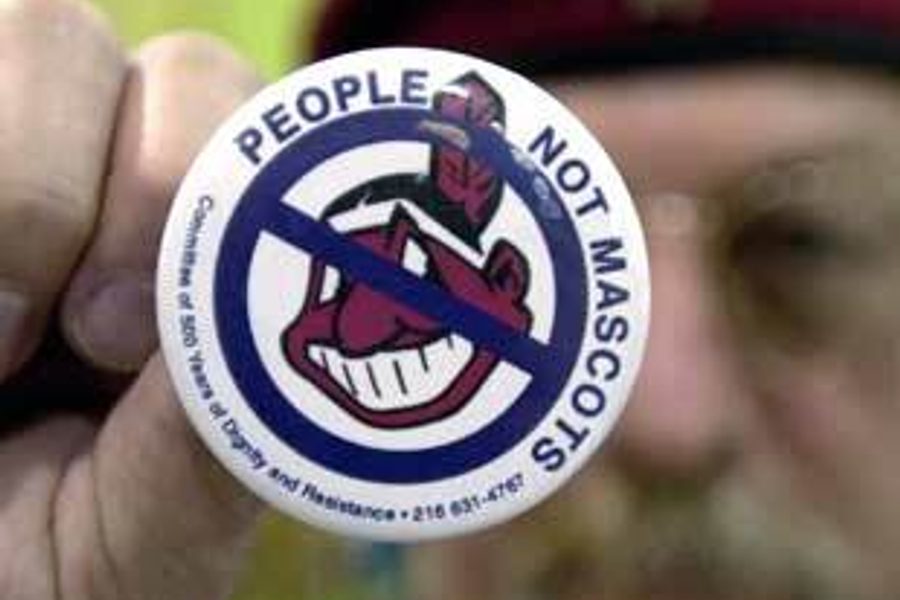

How do black players on the NFL’s Washington Redskins reconcile their team spirit with the racial slur that is their team’s name?
The word “Redskins” derives from the genocidal practice of scalping Native Americans to earn a bounty. Certain parts of the country valued these bloody clumps of flesh and hair (red skins) as currency.
How could African-American athletes, who need only look to their own history to find similar demeaning slurs, tolerate such overt disrespect of another historically oppressed group?
This is a question not just for black ball players.Public acceptance of the Redskins mascot reveals America’s race consciousness (or lack of it) better than any politician’s speech hailing American democracy. What’s more, how can we allow such a symbol of savagery to be the name of a sports team in America’s capitol city?
These thoughts occurred to me as I pondered the recent decision of the National Collegiate Athletic Association (NCAA) to implement a limited ban on Indian mascots. In May, the NCAA decided to prohibit the use of American Indian mascots and logos by sports teams during postseason NCAA tournaments.
The rule, which goes into effect August 1, 2008, prohibits displays of “hostile or abusive” references on uniforms of teams, cheerleaders and bands during postseason tournaments. And beginning February 1, 2006, the group will ban institutions with such mascots or imagery from hosting any NCAA championship event.
Of particular interest are the names of 18 college mascots: Seven of the mascots are “Indians;” six are specific tribal names, like the Chippewas or the Utes; three are “Braves;” and the remaining two are the “Savages” and the “Redmen.” This long standing practice of adopting Indian mascots is in itself an act of dehumanization, but one often compounded by garishly costumed performances and insulting gestures.
And although several colleges and universities have banished demeaning mascots, the impulse to stereotype dies hard in a culture that long has normalized cultural slurs. That difficulty is evident even in the NCAA ruling, which, while better than nothing, is still rather weak. For example, the group limits its prohibition to post-season games.
The persistence of such biased portrayals into the 21st century is as much a failure of progressive politics as it is a product of racial atavism. Why, for example, haven’t major civil rights organizations been at the forefront of protest against mascots demeaning Native Americans? Where are the armies of D.C.-area progressives in the battle against the name “Redskins” – a slur that repudiates the democratic principles of the nation whose capital the team represents?
The silence from rights groups is one reason black athletes have failed to see their kinship with Native American groups struggling against biased depictions. It also helps explain why an allegedly progressive hip-hop group like OutKast shamelessly promoted racial stereotypes by donning “Indian” costumes and dancing cartoonishly during a 2004 performance on the televised Grammy Awards show. Several Native American groups filed complaints to CBS about Outkast’s minstrel-like performance.
The group later apologized for any offense they may have caused, but these “conscious” rappers’ initial lack of sensitivity to Native American concerns was surprising. Stereotypical depictions of America’s indigenous people are cultural assumptions with deep roots.
“The real issue is about power and control,” wrote Cornel Pewewardy, an assistant professor of education at the University of Kansas and widely published writer on Native American issues, in a 1999 essay. He argues that negative images of Native Americans still nourish this nation’s frontier legacy. “Through the politics of colonization, indigenous peoples were socialized into stereotypes that we were inferior, stupid, lazy, thereby fulfilling the need to be everybody’s mascot.”
Nearly 15 years ago, the American Indian Mental Health Association of Minnesota tallied the toll of these images. The group wrote, “We are in agreement that using images of American Indians as mascots, symbols, caricatures, and namesakes for non-Indian sports teams, businesses and other organizations is damaging to the self-identity, self-concept and self-esteem of our people.” Since then several other groups have joined to denounce the cultural impact of negative depictions.
The reasoning that links the purpose of such mascots to their debilitating effects, likewise applies to the stereotypes deployed (and still utilized) to depict African Americans. The struggle to decriminalize the image of African-American men, for instance, is part of the same struggle to banish the Redskins.
If the civil rights community is truly serious about attacking racist stereotypes it must full heartedly join ranks with Native American groups to demand that we cease and desist in demeaning our indigenous hosts.
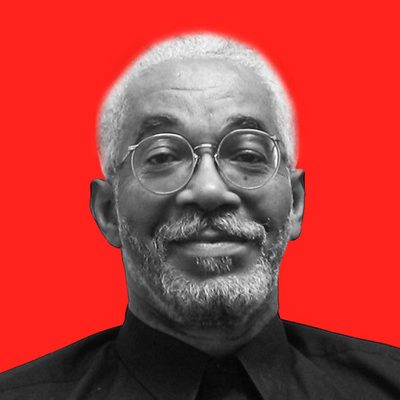
Salim Muwakkil is a senior editor of In These Times and host of “The Salim Muwakkil Show” on radio station WVON-AM in Chicago. Muwakkil was also contributing columnist for both the Chicago Sun-Times (1993 – 1997) and the Chicago Tribune (1998 – 2005). He is also a co-founder of Pacifica News’ network daily “Democracy Now” program and served as an adjunct professor at Northwestern University, University of Illinois, the Art Institute of Chicago and Chicago’s Columbia College.